
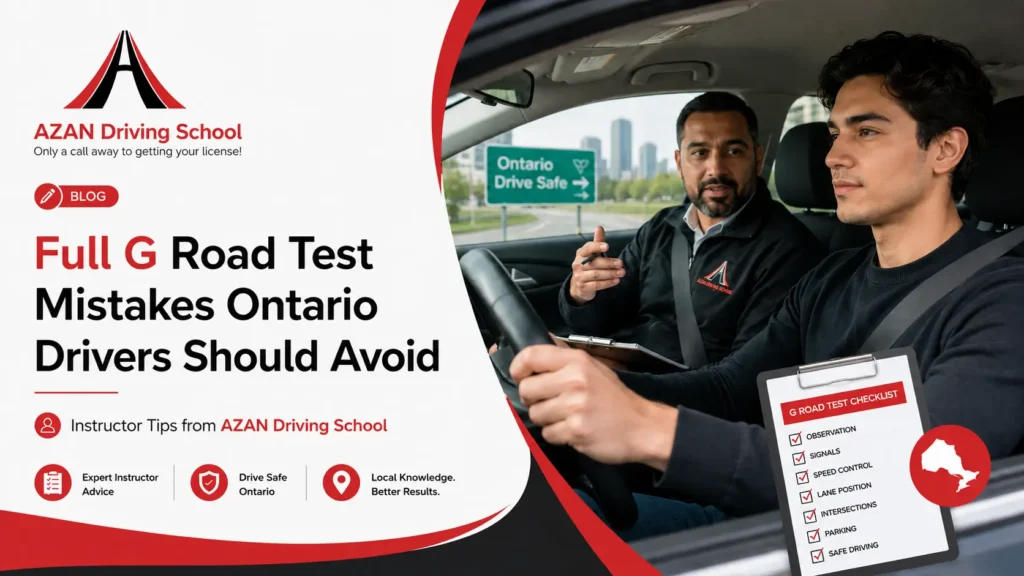
Passing the Full G test in Ontario is a big step. But in my experience as a driving instructor, most students do not fail because they cannot drive. They fail because they get nervous, rush decisions, or miss small safety habits during the test.
I’m Abdul, and I’ve been teaching students in Mississauga for over 20 years. These are the most common Full G test mistakes I see and how you can avoid them.
How to Avoid Common Full G Road Test Errors
1. Not Checking Mirrors and Blind Spots Properly
Many students check mirrors with only their eyes. The examiner may not notice that. During the test, your mirror and blind spot checks should be clear and natural.
Before changing lanes, turning, braking, merging, or exiting the highway, always check your mirrors. Before every lane change, check your blind spot properly.
My advice: Do not check mirrors only for the test. Make it your normal driving habit.
2. Unsafe Lane Changes
Lane changes are very important in the Full G test. Some students signal too late, forget the blind spot, or move before finding a safe gap.
Use this simple method:
Mirror → Signal → Blind Spot → Move when safe
Do not rush just because the examiner asks you to change lanes. If it is not safe, wait.
My advice: A late safe lane change is better than a quick unsafe one.
3. Weak Highway Merging
Many students become nervous when merging onto the highway. They enter too slowly, hesitate, or fail to match traffic speed.
Use the acceleration lane properly. Build your speed, signal early, check your mirrors and blind spot, find a safe gap, and merge smoothly.
My advice: Confidence on the highway comes from practice. Do not go for your Full G test if merging still makes you panic.
4. Driving Too Slowly or Too Fast
Some students drive too slowly because they are nervous. Others miss speed signs and drive too fast. Both can affect your test.
The examiner wants to see that you can control your speed according to the road, traffic, weather, and posted speed limit.
My advice: Safe driving does not mean slow driving. It means controlled driving.
5. Rolling Stops
A rolling stop means your car slows down but does not fully stop. This is a common mistake at stop signs.
Always stop completely before the stop line or crosswalk. Pause for a moment, check properly, then move when safe.
My advice: Do not copy the car in front of you. Make your own complete stop.
6. Following Too Closely
If you follow another car too closely, the examiner may feel unsafe. You need enough space to react if the vehicle in front brakes suddenly.
Keep at least a two-to-three-second gap in normal conditions. In rain, snow, or heavy traffic, keep more space.
My advice: Do not drive under pressure from cars behind you. Keep your safe distance.
7. Panicking During the Test
This is very common. A student drives well during practice, but during the test they panic when the examiner gives instructions.
If the examiner asks you to turn or change lanes, do it only when it is safe. If you miss a turn safely, that is better than making a dangerous move.
My advice: The examiner is checking your safety, not how quickly you follow instructions.
What I Notice as a Driving Instructor in Ontario
After teaching students for more than 20 years, I can say this clearly:
Most students do not need someone to scare them before the test. They need honest feedback and proper practice.
Some students are ready but nervous. Some students are confident but careless. Some students drive well but forget observation habits. My job is to find the real issue and fix it before test day.
Every student is different. A 16-year-old beginner, a working professional, a newcomer to Ontario, and a nervous adult learner all need different types of guidance.
That is why I do not teach every student the same way. I first check where the student stands, then we work step by step.
How AZAN Driving School Helps You Prepare for the Full G Test
AZAN Driving School helps students prepare for the Full G road test with focused lessons, highway practice, lane change training, speed control, observation correction, and test-style feedback.
We help you understand:
- what the examiner wants to see
- where your weak habits are
- how to improve highway confidence
- how to stay calm during instructions
- when you are actually ready for the test
Our goal is not only to help you pass. Our goal is to help you become a safer and more confident driver in real Ontario traffic.
If you are not sure whether you are ready for your Full G test, book an evaluation lesson with AZAN Driving School. We will give you honest feedback before your test date.
Full G Test Preparation Checklist
Before your test, make sure you can do these confidently:
- Check mirrors every few seconds
- Check blind spots before every lane change
- Merge safely onto the highway
- Maintain highway speed confidently
- Exit the highway safely
- Keep proper following distance
- Stop completely at stop signs
- Scan intersections properly
- Control speed in different zones
- Follow examiner instructions calmly
- Make safe decisions without rushing
If you are weak in even two or three of these areas, take more practice before booking or attending the test.
Final Thoughts from Abdul
Do not go for your Full G test only because your test date is close. Go when your driving habits are ready.
If you still forget blind spots, feel nervous on the highway, rush lane changes, or lose control of speed, take more practice first. It is better to spend more time preparing than to fail because of avoidable mistakes.
After more than 20 years of teaching, my advice is simple:
Drive safely first. Pass the test second.
When your habits are safe, your confidence improves. And when your confidence improves, the test becomes much easier.
Ready to prepare for your Full G test in Mississauga or nearby areas? Contact AZAN Driving School and book a focused Full G road test preparation lesson today.
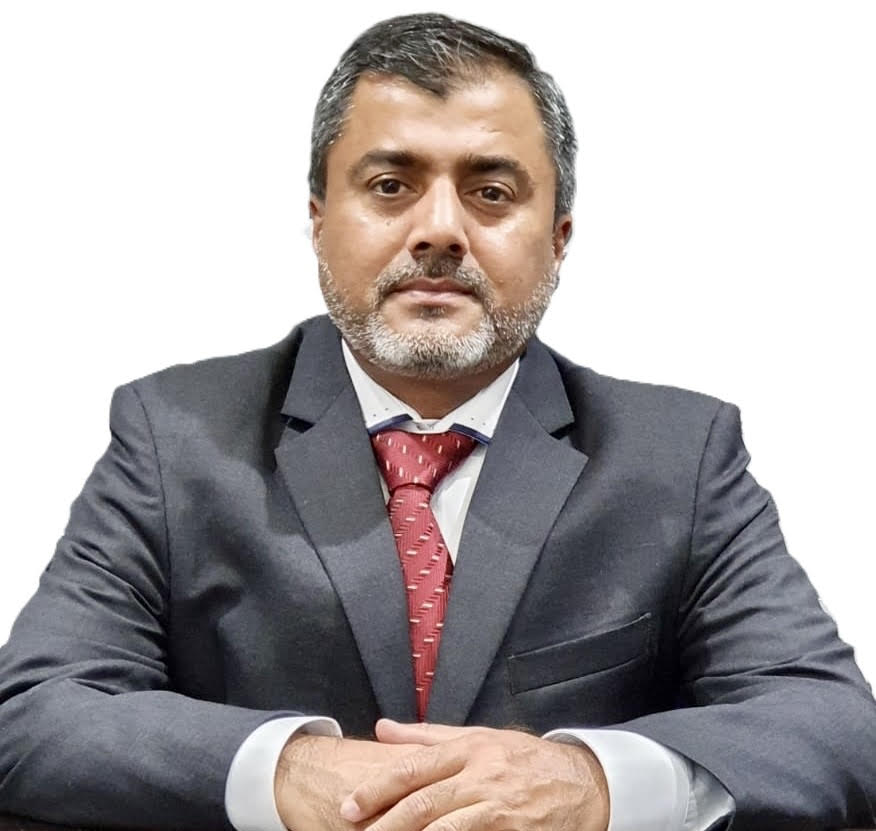
Welcome to Azan Driving School!
I’m Abdul Shaikh, an MTO-approved driving instructor in Mississauga with over 20 years of experience. I help learners pass their G2 and G road tests, build confidence, and become safe, responsible drivers for life. My goal is to make driving simple, stress-free, and practical for everyone. Let’s drive safely and confidently together!